
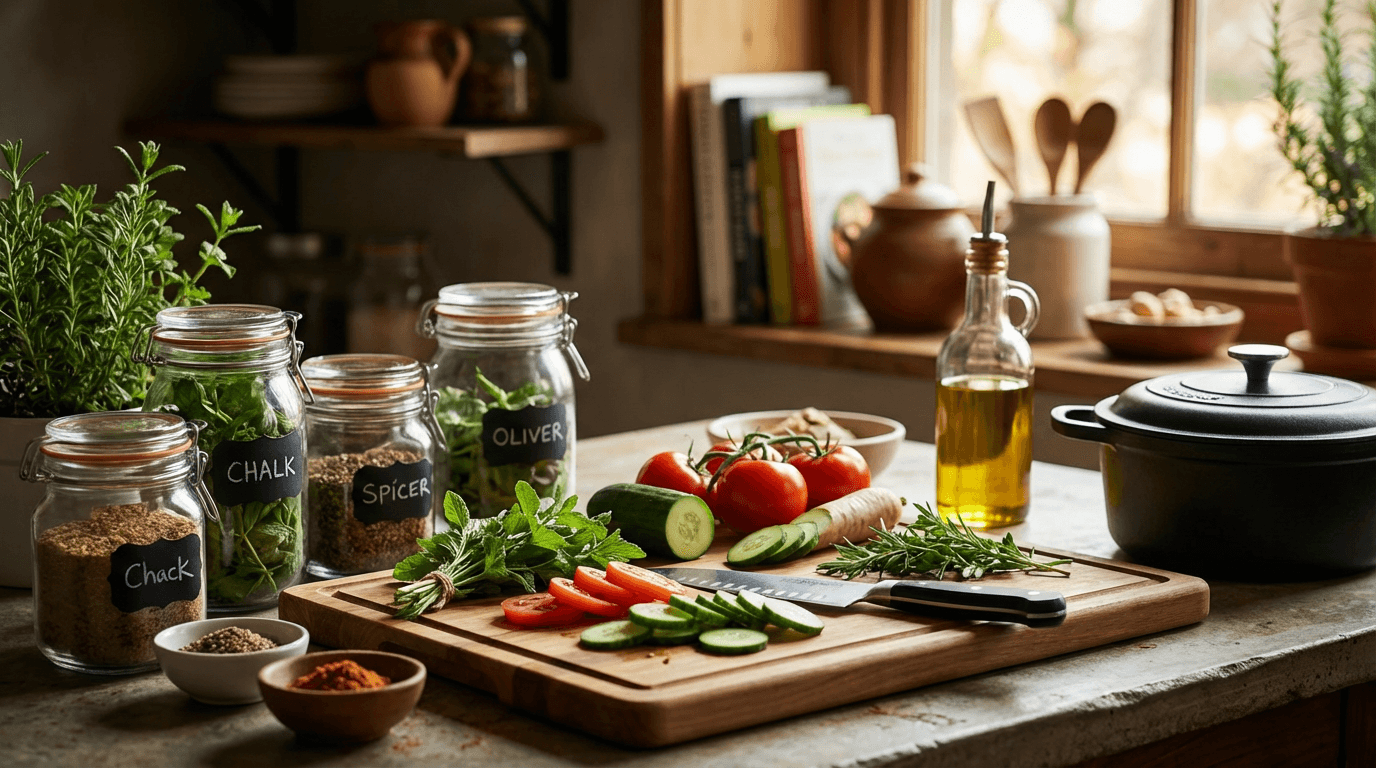
Becoming a Kitchen Hero: Smart Tips for Every Home Cook
Upgrade your cooking skills with these handy tips on storage, cutting, seasoning, and more. Cook smarter, not harder!
💡 Belangrijkste Punten
- Store herbs upright in water and spices in a cool, dark place to maximize freshness.
- Master the 'claw grip' and uniform cutting for safer, more consistent cooking results.
- Avoid overcrowding the pan to ensure ingredients brown properly instead of steaming.
- Layer flavors by adding TastyChef blends at different stages of the cooking process.
Cooking Smarter: Your Path to an Efficient Kitchen
As a food blogger for TastyChef, I know how important efficiency and flavor are in the kitchen. Whether you are a beginner or have been cooking for years, there are always ways to improve your cooking process. Today, we dive into practical tips that help you save time, reduce waste, and make every meal unforgettable.
Storing Food and Keeping It Fresh
A good start is half the battle, and that certainly applies to storing your ingredients. Correct storage extends shelf life and preserves flavor.
- Fruits and Vegetables: Store most vegetables in the crisper drawer of your refrigerator. Herbs like parsley and cilantro stay fresh longer if you place them upright in a glass of water, covered with a bag, in the fridge. Store tomatoes at room temperature for the best flavor.
- Herbs and Spices: Store your TastyChef spice blends in a cool, dark place, away from direct sunlight and heat (so not above the stove!). This ensures the aromas, such as those of the WINGMAN (Chicken Seasoning) or HOLY GUACAMOLE (Mexican Seasoning), are optimally preserved.
- Leftovers: Invest in airtight containers. Cool leftovers quickly and store them in the refrigerator for a maximum of 3-4 days. Freeze them for longer storage.
Knife Skills and Preparation Techniques
A sharp knife is your best friend in the kitchen. Learn how to use it safely and efficiently.
- The Claw Grip: Keep your fingers curled inward so your knuckles serve as a guide for the knife. This prevents accidents.
- Peeling Techniques: For hard vegetables like carrots, use a peeler. For delicate items like garlic, lightly crush the clove first with the flat side of your knife to loosen the skin.
- Uniform Cutting: Try to cut ingredients as uniformly as possible. This ensures even cooking and a more beautiful end result.
Avoiding Common Cooking Mistakes
Even the most experienced chefs make mistakes. Here are a few pitfalls to avoid:
- Overcrowding the Pan: Sear your meat or vegetables in batches. An overcrowded pan lowers the temperature, causing your ingredients to steam instead of brown.
- Tasting Too Early: Give your dish time to develop flavors. Add spices like THE ITALIAN JOB (Italian Seasoning) or WOK THIS WAY (Chinese Seasoning) and let them simmer for a while before tasting and adjusting.
- Forgetting to Taste: Taste during cooking and at the end. Even a little extra SALT BAE (Salt Seasoning) or PEP TALK (Pepper Seasoning) can make a world of difference.
Essential Kitchen Equipment
You don't need an extensive arsenal, but a few good basics make the difference.
- Sharp Chef's Knife: As mentioned before, a quality knife is indispensable. Keep it sharp with a honing steel.
- Cutting Boards: Use separate cutting boards for raw meat/fish and vegetables to prevent cross-contamination.
- Measuring Tools: Accuracy is important in baking, but also in cooking. Good measuring cups and spoons are essential.
Substituting Ingredients: Creativity in the Kitchen
Don't panic if you're missing something. Often there are great alternatives.
- Fresh Herbs vs. Dried: One teaspoon of dried herbs is equivalent to about three teaspoons of fresh herbs. Keep this in mind if, for example, you replace fresh basil with the dried version in our PASTA LA VISTA (Pasta Seasoning) mix.
- Dairy Products: Milk can often be replaced by almond milk or soy milk. Crème fraîche by yogurt or sour cream.
- Spices: No sweet paprika powder? A touch of our CANDY CRUSH (Sweet Seasoning) can in some cases give an interesting twist to sweet dishes. For heat, you can always fall back on HOT STUFF (Spicy Seasoning) or FIRE STARTER (Extra Spicy Seasoning) if you don't have fresh chili peppers, for example.
Perfect Seasoning: The Art of Flavor
Seasoning is the soul of every dish. With TastyChef, you make it easy for yourself.
- Building Layers: Start with a basic seasoning (salt and pepper) and build the flavors. Add the main spice blend halfway through the cooking process, such as GRILL THRILL (Grill Seasoning) for your meat or FIN-TASTIC (Fish Seasoning) for your fish. Taste and add more at the end if necessary.
- When to Add: Dried herbs like those in SLICE SLICE BABY (Pizza Seasoning) or GOING DUTCH (Dutch Seasoning) can simmer longer to release their flavors. Fresh herbs are often added at the last moment to preserve their fresh aroma.
- Be Creative: Experiment! The ZEST FRIEND (Lemon & Garlic Seasoning) is not only delicious with chicken, for example, but also fantastic with roasted vegetables. THE BALLER (Meatball Seasoning) is not just for meatballs, but also delicious in a vegetarian lentil stew. Dare to vary!
❓ Veelgestelde Vragen
How do I keep fresh herbs like parsley fresh for longer?
Place them upright in a glass of water, cover with a plastic bag, and store them in the refrigerator.
What is the ratio for substituting fresh herbs with dried herbs?
Generally, one teaspoon of dried herbs is equal to three teaspoons of fresh herbs.
Why shouldn't I overcrowd my pan?
Adding too many ingredients at once lowers the pan's temperature, which causes food to steam in its own moisture rather than getting a nice brown sear.


